Behavior
A/V-(으)ㄴ데/는데
Explanation
Use (으)ㄴ데/는데 to give context or show a contrast between connected clauses.
냉면은 맛있는데 너무 차가워요.
The cold noodles are delicious, but they’re too cold.
Seemile Korean Book · Behavior · p. 174
Examples in context
냉면은 맛있는데 너무 차가워요.
Naengmyeon is delicious but too cold.
| Word | In this sentence | Meaning |
|---|---|---|
| 냉면 | 냉면은 | Naengmyeon (cold noodles) |
| 맛있다 | 맛있는데 | delicious |
| 너무 | 너무 | too |
| 차갑다 | 차가워요 | cold |
카이가 마파두부를 만들었는데 /존이 안 먹어요.
Kai made mapo tofu but John isn't eating.
| Word | In this sentence | Meaning |
|---|---|---|
| 카이 | 카이가 | Kai |
| 마파두부 | 마파두부를 | mapa tofu |
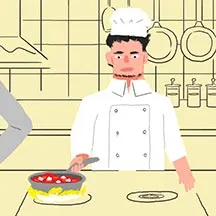
| 만들다 | 만들었는데 | make |
| 존 | 존이 | John |
| 안 | 안 | don't |
| 먹다 | 먹어요 | eat |
히토미는 더운데 목도리를 하고 있어요.
Hitomi is wearing a scarf even though it is hot.
| Word | In this sentence | Meaning |
|---|---|---|
| 히토미 | 히토미는 | Hitomi |
| 덥다 | 더운데 | hot |
| 목도리 | 목도리를 | muffler |
| 하고 있다 | 하고 있어요 | be wearing |
아람이는 가방이 많은데 또 샀어요.
Aram bought a bag again even though she already has so many.
| Word | In this sentence | Meaning |
|---|---|---|
| 아람 | 아람이는 | Aram |
| 가방 | 가방이 | bag |
| 많다 | 많은데 | many |
| 또 | 또 | again |
| 사다 | 샀어요 | buy |
Vocabulary
- 냉면
- Naengmyeon (cold noodles)
- 맛있다
- delicious
- 너무
- too
- 차갑다
- cold
- 카이
- Kai
- 마파두부
- mapa tofu
- 만들다
- make
- 존
- John
- 안
- don't
- 먹다
- eat
- 히토미
- Hitomi
- 덥다
- hot
- 목도리
- muffler
- 하고 있다
- be wearing
- 아람
- Aram
- 가방
- bag
- 많다
- many
- 또
- again
- 사다
- buy
Practice
- Read one Korean example aloud, then cover it and rebuild the sentence from its meaning.
- Identify the form explained above and compare it with the forms in the word table.
- Change one person, place or object while keeping the grammar and speech level consistent. Check your sentence against the rule.
Vocabulary check

- 힘들다
- 아프다
- 맛있다
- 멈추다
Show answer
3. 맛있다
Vocabulary check
- 달리기
- 만들다
- 차갑다
- 멈추다
Show answer
2. 만들다
Book exercises: p. 178. The online scene quizzes above are separate practice.
Video lesson
A/V-(으)면, A/V-(으)려면, A/V-아도/어도, A/V-(으)ㄴ데/는데, A/V-(으)니까
YouTube · 27:13Related lessons
- A/V-(으)면 — Attach (으)면 to a verb or adjective stem to introduce a condition or a recurring situation.
- V-(으)려면 — Use (으)려면 to introduce an intended goal before giving a condition or step needed to reach it.
- A/V-아도/어도 — Use 아도/어도 for a situation that does not change the outcome of the main clause.
- A/V-(으)니까 — Attach (으)니까 to give a reason, including when the next clause is a suggestion or request.