La fiesta
~(으)ㄹ까요?/(으)ㄹ래요?
Explicación
Se usa ‘∼(으)ㄹ까요?/∼(으)ㄹ래요?’ para preguntar si está bien una situación para otros.
• 아람, 이제 자리에 앉을까요?
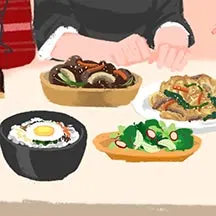
• 카이, 불고기부터 먹어 볼래요?
같이 먹을까요? 뭐 먹을래요?
Shall we eat together? What would you like to eat?
Seemile Korean Book · La fiesta · p. 252
Ejemplos en contexto
우리 이제 자리에 앉을까요?
¿Tomamos asiento ahora?
| Word | In this sentence | Meaning |
|---|---|---|
| 우리 | 우리 | nuestro(a) |
| 이제 | 이제 | ahora |
| 자리 | 자리에 | lugar |
| 앉다 | 앉을까요? | sentarse |
이제 식사를 시작할까요?
¿Vamos a empezar a comer ahora?
| Word | In this sentence | Meaning |
|---|---|---|
| 이제 | 이제 | ahora |
| 식사 | 식사를 | comer |
| 시작하다 | 시작할까요? | empezar |
불고기부터 먹어 볼래요?
¿Vas a probar bulgoki primero?
| Word | In this sentence | Meaning |
|---|---|---|
| 불고기 | 불고기부터 | bulgoki |
| 먹어 보다 | 먹어 볼래요? | probar |
비빔밥 맛이 어떤지 말해 줄래요?
¿Puedes comentar cómo es el sabor de bibimbap por favor?
| Word | In this sentence | Meaning |
|---|---|---|
| 비빔밥 | 비빔밥 | bibimbap |
| 맛 | 맛이 | sabor |
| 어떻다 | 어떤지 | cómo ser |
| 말해 주다 | 말해 줄래요? | decir |
Vocabulario
- 우리
- nuestro(a)
- 이제
- ahora
- 자리
- lugar
- 앉다
- sentarse
- 식사
- comer
- 시작하다
- empezar
- 불고기
- bulgoki
- 먹어 보다
- probar
- 비빔밥
- bibimbap
- 맛
- sabor
- 어떻다
- cómo ser
- 말해 주다
- decir
Práctica
- Read one Korean example aloud, then cover it and rebuild the sentence from its meaning.
- Identify the form explained above and compare it with the forms in the word table.
- Change one person, place or object while keeping the grammar and speech level consistent. Check your sentence against the rule.
Vocabulary check

- 이제
- 앉다
- 자리
- 부어 주다
Ver respuesta
3. 자리
Vocabulary check
- 이제
- 시작하다
- 식사
- 자리
Ver respuesta
3. 식사
Book exercises: p. 257. The online scene quizzes above are separate practice.
Videoclase
V-아/어 주세요, V-(으)ㄹ까요?/(으)ㄹ래요?, V-아/어 줄까요?, V-지 말아요
YouTube · 17:50Lecciones relacionadas
- ~아 주세요/어 주세요 — Se usa ‘∼아 주세요/어 주세요’ cuando se pide el favor de que otro haga algo. • 아 주세요 : Se lo usa cuando la última sílaba de la raíz de un verbo tiene ‘ㅏ’ u ‘ㅗ’[카이, 젓가락을 식탁에 놓아 주세요.] • 어 주세요 : Se lo usa cuando la última sílaba de la raíz de un verbo no tiene ‘ㅏ’ ni ‘ㅗ’[히토미, 컵에 음료수를 부어 주세요.] * infinitivo : 아 주다/어 주다 * Conjugación irregular ‘ㅅ’: Cuando los verbos o adjetivos cuyas raíces terminan con ‘ㅅ, se unen a otras palabras, se apocopa ‘ㅅ’.
- ~아 줄까요?/어 줄까요? — Se usa ‘∼아 줄까요?/어 줄까요?’ para preguntar si es posible que le hagan un favor. • 히토미, 창문을 닫아 줄까요? • 카이, 불고기를 더 덜어 줄까요?
- ~지 말아요 — Se usa ‘∼지 말아요’ para prohibir hacer algo. • 급하게 먹지 말아요. • 그런 말 하지 말아요. 너무 맛있어요 * infinitivo : 지 말다