Jantar
~아 줄까요?/어 줄까요?
Explicação
‘~아/어 줄까요?’ Vem após o verbo, e é usado para perguntar se o falante deve fazer alguma ação para o ouvinte.
• 히토미, 창문을 닫아 줄까요?
• 카이, 불고기를 더 덜어 줄까요?
문을 열어 줄까요?
Would you like me to open the door?
Seemile Korean Book · Jantar · p. 253
Form and use
-아야 해요: must/have to. -아도 돼요: it's okay to / may. -지 않아도 돼요: don't have to.
| Condition | Form | Example |
|---|---|---|
| 의무 (must) | V 어간 + 아/어야 해요 | 가야 해요 · 먹어야 해요 |
| 허가 (may) | V 어간 + 아/어도 돼요 | 가도 돼요? · 써도 돼요? |
| 불필요 (don't have to) | V 어간 + 지 않아도 돼요 | 오지 않아도 돼요 |
카이는 지금 집에 가야 해요
Kai has to go home now
여기서 사진 찍어도 돼요?
May I take photos here?
Exemplos em contexto
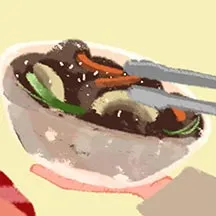
불고기를 더 덜어 줄까요?
Você gostaria de mais bulgogi no seu prato?
| Word | In this sentence | Meaning |
|---|---|---|
| 불고기 | 불고기를 | bulgogui |
| 더 | 더 | mais |
| 덜어 주다 | 덜어 줄까요? | dar |
맥주를 더 부어 줄까요?
Quer mais cerveja?
| Word | In this sentence | Meaning |
|---|---|---|
| 맥주 | 맥주를 | cerveja |
| 더 | 더 | mais |
| 부어 주다 | 부어 줄까요? | despejar |
비빔밥을 비벼 줄까요?
Você quer que misture seu bibimbap?
| Word | In this sentence | Meaning |
|---|---|---|
| 비빔밥 | 비빔밥을 | bibimbap |
| 비벼 주다 | 비벼 줄까요? | misturar |
창문을 닫아 줄까요?
Você quer que feche a janela?
| Word | In this sentence | Meaning |
|---|---|---|
| 창문 | 창문을 | janela |
| 닫아 주다 | 닫아 줄까요? | fechar |
Vocabulário
- 불고기
- bulgogui
- 더
- mais
- 덜어 주다
- dar
- 맥주
- cerveja
- 부어 주다
- despejar
- 비빔밥
- bibimbap
- 비벼 주다
- misturar
- 창문
- janela
- 닫아 주다
- fechar
Prática
- Read one Korean example aloud, then cover it and rebuild the sentence from its meaning.
- Identify the form explained above and compare it with the forms in the word table.
- Change one person, place or object while keeping the grammar and speech level consistent. Check your sentence against the rule.
Vocabulary check
- 비빔밥
- 음료수
- 불고기
- 젓가락
Ver resposta
3. 불고기
Vocabulary check

- 더
- 맥주
- 부어 주다
- 말해 주다
Ver resposta
2. 맥주
Book exercises: p. 257. The online scene quizzes above are separate practice.
Videoaula
V-아/어 주세요, V-(으)ㄹ까요?/(으)ㄹ래요?, V-아/어 줄까요?, V-지 말아요
YouTube · 17:50Lições relacionadas
- ~아 주세요/어 주세요 — ~ 아 주세요 / 어 주세요' vem após o verbo, e é usado para pedir a alguém que faça determinada ação • 아 주세요 : Usado quando a raiz do verbo termina com ‘ㅏ’ ou ‘ㅗ’[카이, 젓가락을 식탁에 놓아 주세요.] • 어 주세요 : Usado quando a raiz do verbo não termina com ‘ㅏ’ ou ‘ㅗ’[히토미, 컵에 음료수를 부어 주세요.] * Forma básica : ~아 주다/어 주다 * irregular ㅅ: Quando alguns verbos ou adjetivos são combinados com outras palavras, às vezes o "ㅅ" é excluído.
- ~(으)ㄹ까요?/(으)ㄹ래요? — ‘~(으)ㄹ까요? , ~(으)ㄹ래요?’ Vem após o verbo, e é usado para perguntar ao ouvinte a intenção de algo ou alguma escolha. • 아람, 이제 자리에 앉을까요? • 카이, 불고기부터 먹어 볼래요?
- ~지 말아요 — ~ 지 말아요' vem após o verbo, e é usado para impedir o ouvinte de fazer alguma ação. • 급하게 먹지 말아요. • 그런 말 하지 말아요. 너무 맛있어요 * Forma básica: ~지 말다