副食店1
(으)로
说明
‘~(으)로’是显示某种事情的方法和手段的助词
• 으로 : 前一个字除了以‘ㄹ’结束辅音以外, 都使用으로。[카이는 생선으로 만두를 만들어요.]
• 로 : 前一个字以元音或‘ㄹ’结束时,都使用로。[히토미는 새우로 튀김을 만들었어요.]
밀가루로 빵을 만들어요.
I make bread with flour.
Seemile Korean Book · 副食店1 · p. 101
Form and use
(으)로 covers direction ('toward'), means ('by/with'), material ('made of'), and cause/reason. One of Korean's most versatile particles.
| Condition | Form | Example |
|---|---|---|
| 받침X / ㄹ받침 | N + 로 | 버스로 · 오른쪽으로(X)→오른쪽으로 |
| 받침O (ㄹ 제외) | N + 으로 | 연필로(X)→연필로 · 오른쪽으로 |
| 4가지 의미 | 방향/수단/재료/원인 | 서울로 (direction) · 버스로 (by bus) · 나무로 (made of wood) · 감기로 (due to a cold) |
카이는 자전거로 학교에 가요
Kai goes to school by bicycle (means)
오른쪽으로 가세요
Go to the right (direction)
语境例句
히토미는 새우로 튀김을 만들어요.
田中瞳做炸虾。
| Word | In this sentence | Meaning |
|---|---|---|
| 히토미 | 히토미는 | 田中瞳 |
| 새우 | 새우로 | 虾 |
| 튀김 | 튀김을 | 炸 |
| 만들다 | 만들어요 | 做 |
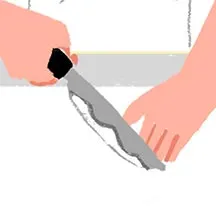
카이는 칼로 생선을 잘라요.
凯用刀切鱼。
| Word | In this sentence | Meaning |
|---|---|---|
| 카이 | 카이는 | 凯 |
| 칼 | 칼로 | 刀 |
| 생선 | 생선을 | 鱼 |
| 자르다 | 잘라요 | 切 |
카이는 생선으로 만두를 만들어요.
凯用鱼做饺子。
| Word | In this sentence | Meaning |
|---|---|---|
| 카이 | 카이는 | 凯 |
| 생선 | 생선으로 | 鱼 |
| 만두 | 만두를 | 饺子 |
| 만들다 | 만들어요 | 做 |
존은 인터넷으로 딸기를 주문해요.
约翰在网上预定草莓。
| Word | In this sentence | Meaning |
|---|---|---|
| 존 | 존은 | 约翰 |
| 인터넷 | 인터넷으로 | 网上 |
| 딸기 | 딸기를 | 草莓 |
| 주문하다 | 주문해요 | 预定 |
词汇
- 히토미
- 田中瞳
- 새우
- 虾
- 튀김
- 炸
- 만들다
- 做
- 카이
- 凯
- 칼
- 刀
- 생선
- 鱼
- 자르다
- 切
- 만두
- 饺子
- 존
- 约翰
- 인터넷
- 网上
- 딸기
- 草莓
- 주문하다
- 预定
练习
- Read one Korean example aloud, then cover it and rebuild the sentence from its meaning.
- Identify the form explained above and compare it with the forms in the word table.
- Change one person, place or object while keeping the grammar and speech level consistent. Check your sentence against the rule.
Vocabulary check

- 생선
- 계란
- 비빔밥
- 튀김
显示答案
4. 튀김
Vocabulary check
- 못
- 꽃
- 칼
- 돈
显示答案
3. 칼
Book exercises: p. 105. The online scene quizzes above are separate practice.
视频课程
Postpositional particles N와/과, N하고, N(이)랑, N밖에, N(으)로
YouTube · 24:43相关课程
- 와/과, 하고/(이)랑 — ‘와/과’和‘하고/(이)랑’是把两个或两个以上相类似事物相连接的助词。 • 와 : 在无收音的字后面使用[채소 와 소고기] • 과 : 在有收音的字后面使用[비빔밥과 불고기] • 하고 : 和收音无关来使用[히토미는 로한하고] • 랑 : 在无收音的字后面使用[새우랑 생선이랑] • 이랑 : 在有收音的字后面使用[새우랑 생선이랑]
- 밖에 — ‘밖에’是显示没有其他选择或只有唯一选择时使用的助词。‘밖에’后面的文章一般是否定句。 • 냉장고에 우유밖에 없었어요. 冰箱里只有牛奶
- 실례해요/미안해요/고마워요/감사해요 — ‘실례해요’的基本型是‘실례하다’,在向对方请求谅解时使用。미안해요’的基本型是‘미안하다’,在向对方表达自己失误或错误时使用。‘고마워요’的基本型是‘고맙다’,‘감사해요’의的基本型是‘감사하다’。两个在向对方给予的帮助和好意表达感谢时使用。若非敬语时,像‘실례해’, ‘미안해’, ‘고마워’, ‘감사해’一样,把‘요’字去掉后使用。 • 실례해요. 혹시 고추냉이를 팔아요?不好意思,请问卖芥末吗? • 미안해요. 고추냉이는 안 팔아요.对不起,不卖芥末 • 고추냉이는 저기에서 팔아요.감사합니다. 在那里卖芥末,谢谢。 • 고추냉이를 팔아요? 네, 여기 있어요.고마워요. 卖芥末吗? 是的,这里有,谢谢。