Weather
Compare Tenses–Declarative Sentences
Explanation
Compare the plain polite statement endings for past, present and future. Match the ending to words such as 어제, 오늘 and 내일.
어제 비가 왔어요. 오늘은 맑아요. 내일은 바람이 불 거예요.
It rained yesterday. It’s clear today. It will be windy tomorrow.
Seemile Korean Book · Weather · p. 84
Examples in context
어제는 비가 내렸어요.
It rained yesterday.
| Word | In this sentence | Meaning |
|---|---|---|
| 어제 | 어제는 | Yesterday |
| 비 | 비가 | rain |
| 내리다 | 내렸어요 | rain |
히토미는 추웠어요.
Hitomi was cold.
| Word | In this sentence | Meaning |
|---|---|---|
| 히토미 | 히토미는 | Hitomi |
| 춥다 | 추웠어요 | cold |
오늘은 날씨가 맑아요.
It is sunny today.
| Word | In this sentence | Meaning |
|---|---|---|
| 오늘 | 오늘은 | today |
| 날씨 | 날씨가 | weather |
| 맑다 | 맑아요 | sunny |
히토미가 빨래를 널어요.
Hitomi hangs out the laundry.
| Word | In this sentence | Meaning |
|---|---|---|
| 히토미 | 히토미가 | Hitomi |
| 빨래 | 빨래를 | laundry |
| 널다 | 널어요 | hang |
내일은 바람이 불 거예요.
It will be windy tomorrow.
| Word | In this sentence | Meaning |
|---|---|---|
| 내일 | 내일은 | tomorrow |
| 바람 | 바람이 | wind |
| 불다 | 불 | blow |
| 거다 | 거예요 | will |
Vocabulary
- 어제
- Yesterday
- 비
- rain
- 내리다
- rain
- 히토미
- Hitomi
- 춥다
- cold
- 오늘
- today
- 날씨
- weather
- 맑다
- sunny
- 빨래
- laundry
- 널다
- hang
- 내일
- tomorrow
- 바람
- wind
- 불다
- blow
- 거다
- will
Practice
- Read one Korean example aloud, then cover it and rebuild the sentence from its meaning.
- Identify the form explained above and compare it with the forms in the word table.
- Change one person, place or object while keeping the grammar and speech level consistent. Check your sentence against the rule.
Vocabulary check

- 친구들
- 꽃
- 향수
- 비
Show answer
4. 비
Vocabulary check
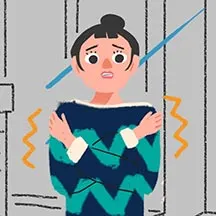
- 내리다
- 비
- 춥다
- 향수
Show answer
3. 춥다
Book exercises: p. 91. The online scene quizzes above are separate practice.
Video lesson
Compare Tenses; Declarative, Negative, Interrogative, N의
YouTube · 19:28Related lessons
- Compare Tenses‐Negative Sentences (1) — With short negation, 안 stays before the verb while the ending expresses time.
- Compare Tenses‐Negative Sentences (2) — With long negation, the tense is carried by 않다, after the main stem and 지.
- Compare Tenses‐Interrogative Sentences — Question intonation works with past, present and future endings.
- N의 — Attach 의 to the possessor before the thing possessed. In speech, possessive 의 is often pronounced 에.