Grocery
N와/과, N하고, N(이)랑
Explanation
Use 와/과, 하고 or (이)랑 to join nouns or express company. After a consonant choose 과 or 이랑, and after a vowel choose 와 or 랑.
친구하고 시장에 갔어요.
I went to the market with a friend.
Seemile Korean Book · Grocery · p. 99
Form and use
Three ways to say 'and' or 'with' between nouns. All three mean the same — they differ only in formality level.
| Condition | Form | Example |
|---|---|---|
| 와/과 (formal) | 받침X → 와 · 받침O → 과 | 의사와 간호사 · 빵과 우유 |
| 하고 (neutral) | N + 하고 (no change) | 빵하고 우유 · 아람이하고 |
| (이)랑 (casual) | 받침X → 랑 · 받침O → 이랑 | 카이랑 · 존이랑 |
아람이는 히토미하고 쇼핑했어요
Aram went shopping with Hitomi
카이랑 존이랑 같이 먹었어요
I ate together with Kai and John (casual)
Form and use
Examples in context
아람이는 채소와 소고기를 샀어요.
Aram bought vegetables and beef.
| Word | In this sentence | Meaning |
|---|---|---|
| 아람 | 아람이는 | Aram |
| 채소 | 채소와 | vegetables |
| 소고기 | 소고기를 | beef |
| 사다 | 샀어요 | buy |
아람이는 비빔밥과 불고기를 만들었어요.
Aram made bibimbap and bulgogi.
| Word | In this sentence | Meaning |
|---|---|---|
| 아람 | 아람이는 | Aram |
| 비빔밥 | 비빔밥과 | bibimbap |
| 불고기 | 불고기를 | bulgogi |
| 만들다 | 만들었어요 | make |
히토미는 로한하고 슈퍼마켓에 갔어요.
Hitomi went to the supermarket with Rohan.
| Word | In this sentence | Meaning |
|---|---|---|
| 히토미 | 히토미는 | Hitomi |
| 로한 | 로한하고 | Rohan |
| 슈퍼마켓 | 슈퍼마켓에 | supermarket |
| 가다 | 갔어요 | go |
히토미는 새우랑 생선이랑 /고추냉이를 샀어요.
Hitomi bought shrimp, fish and wasabi.
| Word | In this sentence | Meaning |
|---|---|---|
| 히토미 | 히토미는 | Hitomi |
| 새우 | 새우랑 | shrimp |
| 생선 | 생선이랑 | fish |
| 고추냉이 | 고추냉이를 | wasabi |
| 사다 | 샀어요 | buy |
Vocabulary
- 아람
- Aram
- 채소
- vegetables
- 소고기
- beef
- 사다
- buy
- 비빔밥
- bibimbap
- 불고기
- bulgogi
- 만들다
- make
- 히토미
- Hitomi
- 로한
- Rohan
- 슈퍼마켓
- supermarket
- 가다
- go
- 새우
- shrimp
- 생선
- fish
- 고추냉이
- wasabi
Practice
- Read one Korean example aloud, then cover it and rebuild the sentence from its meaning.
- Identify the form explained above and compare it with the forms in the word table.
- Change one person, place or object while keeping the grammar and speech level consistent. Check your sentence against the rule.
Vocabulary check

- 채소
- 빵
- 고기
- 국수
Show answer
1. 채소
Vocabulary check
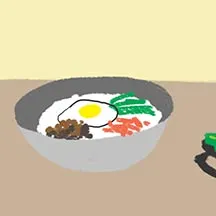
- 비빔밥
- 맥주
- 스파게티
- 주스
Show answer
1. 비빔밥
Book exercises: p. 105. The online scene quizzes above are separate practice.
Video lesson
Postpositional particles N와/과, N하고, N(이)랑, N밖에, N(으)로
YouTube · 24:43Related lessons
- N밖에 — 밖에 combines with a negative predicate to mean that only the named amount or item is available.
- N(으)로 — (으)로 marks a material, ingredient, tool or means. Use 로 after a vowel or ㄹ and 으로 after other consonants.
- 실례하다, 죄송하다/미안하다, 고맙다/감사하다 — Use 실례합니다 to get attention politely, 죄송합니다 or 미안해요 to apologize, and 감사합니다 or 고마워요 to thank someone.