Fazer compras 1
와/과, 하고/(이)랑
Explicação
‘와/과’ e ‘하고/(이)랑’ é posposição que fornece o mesmo papel para dois ou mais substantivos.
• 와 : Usado quando a sílaba anterior termina com uma vogal[채소와 소고기]
• 과 : Usado quando a sílaba anterior termina com uma consoante[비빔밥과 불고기]
• 하고 :Pode ser usado com qualquer palavra[히토미는 로한하고]
• 랑 : Usado quando a sílaba anterior termina com uma consoante[새우랑 생선이랑]
• 이랑 :Usado quando a sílaba anterior termina com uma vogal[새우랑 생선이랑]
친구하고 시장에 갔어요.
I went to the market with a friend.
Seemile Korean Book · Fazer compras 1 · p. 99
Form and use
Three ways to say 'and' or 'with' between nouns. All three mean the same — they differ only in formality level.
| Condition | Form | Example |
|---|---|---|
| 와/과 (formal) | 받침X → 와 · 받침O → 과 | 의사와 간호사 · 빵과 우유 |
| 하고 (neutral) | N + 하고 (no change) | 빵하고 우유 · 아람이하고 |
| (이)랑 (casual) | 받침X → 랑 · 받침O → 이랑 | 카이랑 · 존이랑 |
아람이는 히토미하고 쇼핑했어요
Aram went shopping with Hitomi
카이랑 존이랑 같이 먹었어요
I ate together with Kai and John (casual)
Form and use
Exemplos em contexto
아람이는 채소와 소고기를 샀어요.
Aram comprou vegetais e carne bovina.
| Word | In this sentence | Meaning |
|---|---|---|
| 아람 | 아람이는 | Aram |
| 채소 | 채소와 | vegetais |
| 소고기 | 소고기를 | carne bovina |
| 사다 | 샀어요 | comprar |
아람이는 비빔밥과 불고기를 만들었어요.
Aram fez Bibimbap e Bulgogi.
| Word | In this sentence | Meaning |
|---|---|---|
| 아람 | 아람이는 | Aram |
| 비빔밥 | 비빔밥과 | bibimbap |
| 불고기 | 불고기를 | bulgogui |
| 만들다 | 만들었어요 | fazer |
히토미는 로한하고 슈퍼마켓에 갔어요.
Hitomi e Rohan foram ao supermercado.
| Word | In this sentence | Meaning |
|---|---|---|
| 히토미 | 히토미는 | Hitomi |
| 로한 | 로한하고 | Rohan |
| 슈퍼마켓 | 슈퍼마켓에 | supermercado |
| 가다 | 갔어요 | ir |
히토미는 새우랑 생선이랑 /고추냉이를 샀어요.
Hitomi comprou camarão, peixe e wasabi.
| Word | In this sentence | Meaning |
|---|---|---|
| 히토미 | 히토미는 | Hitomi |
| 새우 | 새우랑 | camarão |
| 생선 | 생선이랑 | peixe |
| 고추냉이 | 고추냉이를 | wasabi |
| 사다 | 샀어요 | comprar |
Vocabulário
- 아람
- Aram
- 채소
- vegetais
- 소고기
- carne bovina
- 사다
- comprar
- 비빔밥
- bibimbap
- 불고기
- bulgogui
- 만들다
- fazer
- 히토미
- Hitomi
- 로한
- Rohan
- 슈퍼마켓
- supermercado
- 가다
- ir
- 새우
- camarão
- 생선
- peixe
- 고추냉이
- wasabi
Prática
- Read one Korean example aloud, then cover it and rebuild the sentence from its meaning.
- Identify the form explained above and compare it with the forms in the word table.
- Change one person, place or object while keeping the grammar and speech level consistent. Check your sentence against the rule.
Vocabulary check

- 채소
- 빵
- 고기
- 국수
Ver resposta
1. 채소
Vocabulary check
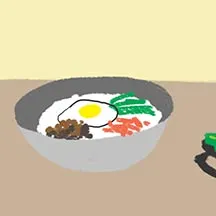
- 비빔밥
- 맥주
- 스파게티
- 주스
Ver resposta
1. 비빔밥
Book exercises: p. 105. The online scene quizzes above are separate practice.
Videoaula
Postpositional particles N와/과, N하고, N(이)랑, N밖에, N(으)로
YouTube · 24:43Lições relacionadas
- 밖에 — 밖에' é uma posposição que diz que não há outra possibilidade ou única opção. A seguinte frase é na maioria das vezes negativa. • 냉장고에 우유밖에 없었어요.
- (으)로 — A posposição "(으) 로" diz método ou significado para algo. • 으로 : Usado quando a sílaba anterior termina com uma vogal ou 'ㄹ' [카이는 생선으로 만두를 만들어요.] • 로 : Usado quando a sílaba anterior termina com uma consoante, exceto 'ㄹ' [히토미는 새우로 튀김을 만들었어요.]
- 실례해요/미안해요/고마워요/감사해요 — A forma básica de '실례해요' é '실례하다', e é usado para pedir a alguém para ser desculpado. E a forma básica de '미안해요' é '미안하다', e é usado quando você cometeu um erro ou fez algo errado. A forma básica de '고마워요' é '고맙다' e a forma básica de '감사해요' é '감사하다'. Ambas as expressões são usadas quando você aprecia o favor de alguém. Em situações informais, use as expressões sem '요', como '실례해', '미안해', '고마워' e '감사해'. • 실례해요. 혹시 고추냉이를 팔아요? • 미안해요. 고추냉이는 안 팔아요. • 고추냉이는 저기에서 팔아요. 감사합니다. • 고추냉이를 팔아요? 네, 여기 있어요. 고마워요.