Travel
A/V-(으)ㄴ N
Explanation
Use (으)ㄴ before a noun for a present description or a completed action. With many ㄹ stems, drop ㄹ before ㄴ.
작은 가방을 샀어요. 어제 산 가방이에요.
I bought a small bag. It’s the bag I bought yesterday.
Seemile Korean Book · Travel · p. 193
Examples in context
히토미가 간 숙소는 바닷가에 있었어요.
The lodging Hitomi went to was located by the seaside.
| Word | In this sentence | Meaning |
|---|---|---|
| 히토미 | 히토미가 | Hitomi |
| 가다 | 간 | go |
| 숙소 | 숙소는 | lodge |
| 바닷가 | 바닷가에 | beach |
| 있다 | 있었어요 | be |
친구들이 먹은 샌드위치는 /카이가 만들었어요.
Kai made the sandwiches his friends ate.
| Word | In this sentence | Meaning |
|---|---|---|
| 친구들 | 친구들이 | friends |
| 먹다 | 먹은 | eat |
| 샌드위치 | 샌드위치는 | sandwich |
| 카이 | 카이가 | Kai |
| 만들다 | 만들었어요 | make |
로한이 탄 비행기는 두 시에 출발했어요.
The airplane Rohan took left at 2 o'clock.
| Word | In this sentence | Meaning |
|---|---|---|
| 로한 | 로한이 | Rohan |
| 타다 | 탄 | take |
| 비행기 | 비행기는 | airplane |
| 두 시 | 두 시에 | 2 o'clock |
| 출발하다 | 출발했어요 | leave |
존이 읽은 책은 탐정소설이었어요.
The book John read was a detective novel.
| Word | In this sentence | Meaning |
|---|---|---|
| 존 | 존이 | John |
| 읽다 | 읽은 | read |
| 책 | 책은 | book |
| 탐정 소설 | 탐정소설 | detective novel |
| 이다 | 이었어요 | be |
Vocabulary
- 히토미
- Hitomi
- 가다
- go
- 숙소
- lodge
- 바닷가
- beach
- 있다
- be
- 친구들
- friends
- 먹다
- eat
- 샌드위치
- sandwich
- 카이
- Kai
- 만들다
- make
- 로한
- Rohan
- 타다
- take
- 비행기
- airplane
- 두 시
- 2 o'clock
- 출발하다
- leave
- 존
- John
- 읽다
- read
- 책
- book
- 탐정 소설
- detective novel
- 이다
- be
Practice
- Read one Korean example aloud, then cover it and rebuild the sentence from its meaning.
- Identify the form explained above and compare it with the forms in the word table.
- Change one person, place or object while keeping the grammar and speech level consistent. Check your sentence against the rule.
Vocabulary check

- 보다
- 가다
- 읽다
- 있다
Show answer
2. 가다
Vocabulary check
- 스파게티
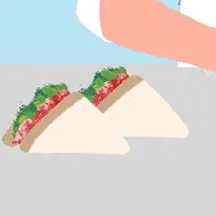
- 샌드위치
- 돼지고기
- 쇠고기
Show answer
2. 샌드위치
Book exercises: p. 199. The online scene quizzes above are separate practice.
Video lesson
V-는 N, A/V-(으)ㄴ N, A/V-(으)ㄹ N, A/V-기, A/V-게
YouTube · 23:49Related lessons
- V-는 N — Attach 는 to an action-verb stem to describe a following noun by a current or habitual action.
- A/V-(으)ㄹ N — Use (으)ㄹ before a noun to describe something in terms of an expected or future action.
- A/V-기 — Attach 기 to turn an action or state into a noun-like expression. This is common in activity names.
- A/V-게 — Attach 게 to a stem to describe how an action is done, as in 늦게 or 조용하게.