Food
V-아요/어요
Explanation
In polite present speech, add 아요 when the stem’s last vowel is ㅏ or ㅗ and 어요 otherwise. 하다 becomes 해요. Vowels often contract.
카이가 고기를 사요. 히토미가 빵을 먹어요.
Kai buys meat. Hitomi eats bread.
Seemile Korean Book · Food · p. 46
Form and use
Standard polite present. Vowel-harmony: ㅏ/ㅗ stem → 아요, others → 어요. 하다 → 해요.
| Condition | Form | Example |
|---|---|---|
| ㅏ / ㅗ 모음 | V 어간 + 아요 | 가다 → 가요 · 오다 → 와요 |
| 그 외 모음 | V 어간 + 어요 | 먹다 → 먹어요 · 읽다 → 읽어요 |
| 하다 동사 | 하다 → 해요 | 공부하다 → 공부해요 |
히토미가 국수를 먹어요
Hitomi eats noodles
아람이는 매일 운동해요
Aram exercises every day
Examples in context
존이 식당에 가요.
John goes to a restaurant.
| Word | In this sentence | Meaning |
|---|---|---|
| 존 | 존이 | John |
| 식당 | 식당에 | restaurant |
| 가다 | 가요 | go |
카이가 고기를 사요.
Kai buys meat.
| Word | In this sentence | Meaning |
|---|---|---|
| 카이 | 카이가 | Kai |
| 고기 | 고기를 | meat |
| 사다 | 사요 | buy |
저는 커피를 마셔요.
I drink coffee.
| Word | In this sentence | Meaning |
|---|---|---|
| 저 | 저는 | I |
| 커피 | 커피를 | coffee |
| 마시다 | 마셔요 | drink |
로한이 채소를 씻어요.
Rohan washes vegetables.
| Word | In this sentence | Meaning |
|---|---|---|
| 로한 | 로한이 | Rohan |
| 채소 | 채소를 | vegetables |
| 씻다 | 씻어요 | wash |
히토미가 빵을 먹어요.
Hitomi eats bread.
| Word | In this sentence | Meaning |
|---|---|---|
| 히토미 | 히토미가 | Hitomi |
| 빵 | 빵을 | bread |
| 먹다 | 먹어요 | eat |
Vocabulary
- 존
- John
- 식당
- restaurant
- 가다
- go
- 카이
- Kai
- 고기
- meat
- 사다
- buy
- 저
- I
- 커피
- coffee
- 마시다
- drink
- 로한
- Rohan
- 채소
- vegetables
- 씻다
- wash
- 히토미
- Hitomi
- 빵
- bread
- 먹다
- eat
Practice
- Read one Korean example aloud, then cover it and rebuild the sentence from its meaning.
- Identify the form explained above and compare it with the forms in the word table.
- Change one person, place or object while keeping the grammar and speech level consistent. Check your sentence against the rule.
Vocabulary check
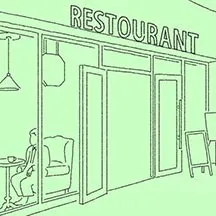
- 꽃병
- 식당
- 주전자
- 접시
Show answer
2. 식당
Vocabulary check

- 식당
- 가다
- 사다
- 먹다
Show answer
3. 사다
Book exercises: p. 55. The online scene quizzes above are separate practice.
Video lesson
Make Korean sentences, 존이 식당에 가요, 저는 차를 안 마셔요, 카이는 생선을 사요?
YouTube · 34:28Related lessons
- 안 V-아요/어요 — Put 안 before the conjugated verb for short negation. With many noun + 하다 verbs, put 안 between the noun and 해요.
- V-지 않아요 — Attach 지 않아요 to the verb stem for long negation.
- V-아요/어요? — The polite present question has the same ending as the statement. Use a question mark in writing and usually rising intonation in speech.
- N이/가 — 이 and 가 mark the subject. Use 이 after a consonant and 가 after a vowel.