घर
에
व्याख्या
कोई व्यक्ति या चीज़ कहाँ मौजूद है, यह बताने के लिए जगह के नाम के बाद 에 लगाएँ।
주방에 냉장고가 있어요.
There’s a refrigerator in the kitchen.
Seemile Korean Book · घर · p. 41
Form and use
에 is a multi-purpose particle covering location of existence, points in time, direction of movement, and rate/frequency.
| Condition | Form | Example |
|---|---|---|
| ① 존재 장소 | 장소 + 에 있다/없다 | 방에 있어요 |
| ② 시간 | 시간 + 에 | 3시에 · 월요일에 · 내일에(X)→내일 |
| ③ 목적지 | 장소 + 에 가다/오다 | 학교에 가요 |
| ④ 단위 | N + 에 | 하루에 두 번 · 한 개에 천 원 |
방에 컴퓨터가 있어요
There's a computer in the room (① existence)
7시에 학교에 가요
I go to school at 7 (② time + ③ direction)
संदर्भ में उदाहरण
주방에 냉장고가 있어요.
रसोई में फ़्रिज है।
| Word | In this sentence | Meaning |
|---|---|---|
| 주방 | 주방에 | रसोई |
| 냉장고 | 냉장고가 | फ़्रिज |
| 있다 | 있어요 | होना, मौजूद होना |
주방에 화분이 없어요.
रसोई में गमला नहीं है।
| Word | In this sentence | Meaning |
|---|---|---|
| 주방 | 주방에 | रसोई |
| 화분 | 화분이 | गमला |
| 없다 | 없어요 | न होना, मौजूद न होना |
식탁에 접시가 없어요.
खाने की मेज़ पर प्लेट नहीं है।
| Word | In this sentence | Meaning |
|---|---|---|
| 식탁 | 식탁에 | खाने की मेज़ |
| 접시 | 접시가 | प्लेट |
| 없다 | 없어요 | न होना, मौजूद न होना |
거실에 탁자가 있어요.
बैठक में एक मेज़ है।
| Word | In this sentence | Meaning |
|---|---|---|
| 거실 | 거실에 | बैठक |
| 탁자 | 탁자가 | मेज़ |
| 있다 | 있어요 | होना, मौजूद होना |
탁자에 책이 있어요.
मेज़ पर एक किताब है।
| Word | In this sentence | Meaning |
|---|---|---|
| 탁자 | 탁자에 | मेज़ |
| 책 | 책이 | किताब |
| 있다 | 있어요 | होना, मौजूद होना |
शब्दावली
- 주방
- रसोई
- 냉장고
- फ़्रिज
- 있다
- होना, मौजूद होना
- 화분
- गमला
- 없다
- न होना, मौजूद न होना
- 식탁
- खाने की मेज़
- 접시
- प्लेट
- 거실
- बैठक
- 탁자
- मेज़
- 책
- किताब
अभ्यास
- Read one Korean example aloud, then cover it and rebuild the sentence from its meaning.
- Identify the form explained above and compare it with the forms in the word table.
- Change one person, place or object while keeping the grammar and speech level consistent. Check your sentence against the rule.
Vocabulary check
- 핸드폰
- 컴퓨터
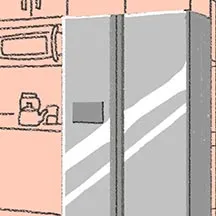
- 냉장고
- 텔레비전
उत्तर देखें
3. 냉장고
Vocabulary check
- 있다
- 없다
- 여
- 저기
उत्तर देखें
2. 없다
Book exercises: p. 44. The online scene quizzes above are separate practice.
वीडियो पाठ
여기/저기/거기, 이것/저것/그것, N이 있어요/없어요
YouTube · 18:33संबंधित पाठ
- 여기/저기/거기 — 여기 बोलने वाले के पास की जगह है, 저기 दोनों से दूर की जगह है, और 거기 सुनने वाले के पास या पहले बताई गई जगह है।
- 이것/저것/그것 — 이것 अपने पास की चीज़, 저것 दोनों से दूर की चीज़, और 그것 सुनने वाले के पास या पहले बताई गई चीज़ के लिए है।
- 있어요 — किसी चीज़ के मौजूद होने या किसी के पास होने के लिए 이/가 있어요 कहें। व्यंजन के बाद 이 और स्वर के बाद 가 लगाएँ।
- 없어요 — किसी चीज़ के मौजूद न होने या किसी के पास न होने के लिए संज्ञा के बाद 이/가 없어요 लगाएँ।